





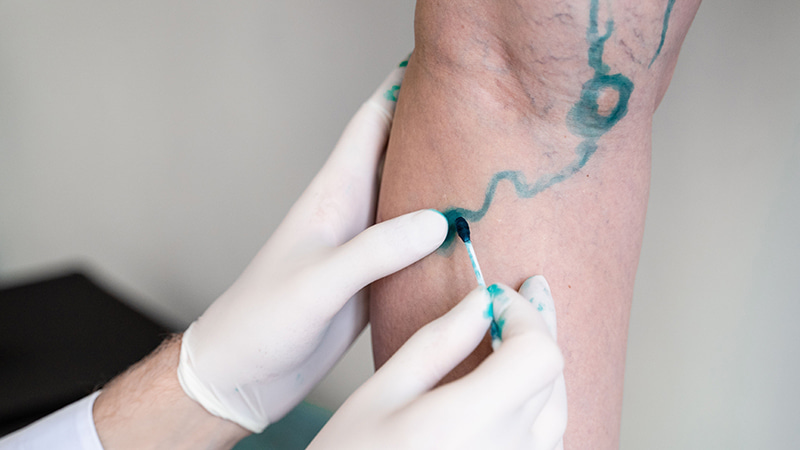
One of the most common questions patients ask is simple: Are varicose veins dangerous?
According to Dr. John Chuback, the honest answer is: rarely, but sometimes, yes.
Varicose veins and chronic venous insufficiency affect an estimated 40 to 50 million Americans. The vast majority will never experience a life-threatening complication. However, even a small percentage of that population represents a significant number of people.
“If just 1% are truly at risk,” Dr. Chuback explains, “that’s still hundreds of thousands of individuals who could face serious complications.”
So while severe outcomes are uncommon, they are not insignificant, and that’s why vein disease should never be casually dismissed.
Most varicose veins are a quality-of-life issue. In rare situations, however, complications can develop.
Clot formation — known as thrombosis — is one of the most concerning potential risks.
A clot that forms in a superficial vein may occasionally extend into the deep venous system, leading to deep vein thrombosis (DVT). If part of that clot breaks loose, it can travel to the lungs and cause a pulmonary embolism, a potentially fatal event.
While this progression is uncommon, it underscores why persistent vein symptoms deserve medical evaluation.
Varicose veins can also become problematic when inflammation develops.
Thrombophlebitis, or inflammation within a vein, may cause redness, warmth, and pain. In some cases, this can progress to cellulitis: a bacterial skin infection.
If left untreated, infection can spread into the bloodstream, resulting in sepsis, which is a medical emergency.
Again, this is rare, but when it occurs, it can escalate quickly.
Long-standing venous insufficiency can eventually lead to open sores, often near the ankles. These are known as venous ulcers.
Venous ulcers:
In advanced cases, infection may even reach the bone. From there, systemic infection becomes a real risk.
“These complications are not common,” Dr. Chuback notes, “but if it happens to you, it becomes very serious very quickly.”
Fortunately, most patients will never face these severe complications. However, varicose veins frequently cause symptoms that interfere with daily life, including:
More importantly, vein disease is progressive. Symptoms often worsen over time if the underlying valve dysfunction is not addressed.
Early evaluation isn’t about assuming the worst, it’s about preventing problems before they escalate.
You should consult a vein specialist if you notice:
At Chuback Vein Center, a simple venous ultrasound allows us to detect clot risk, valve failure, and venous insufficiency early, often before complications develop.
The good news? Today’s treatments are safe, highly effective, and typically performed in-office with little to no downtime.
Depending on your condition, treatment may include:
Addressing the underlying venous insufficiency doesn’t just improve appearance, it reduces symptoms and lowers long-term risk. Just check out some of our patient’s transformations:
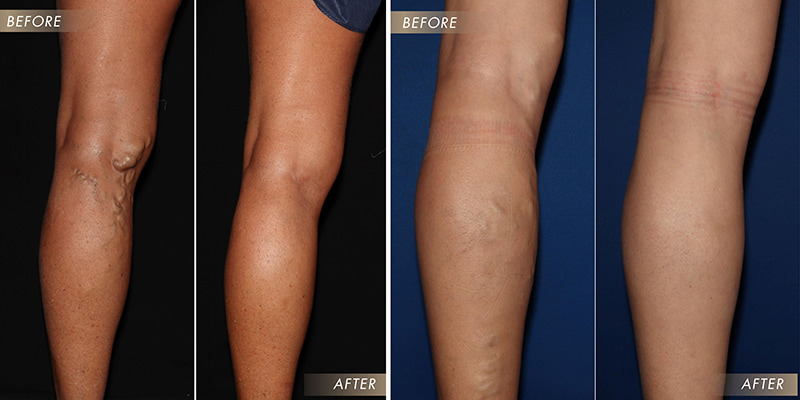
We invite you to explore some of our before-and-after results to see the visible improvements treatment can achieve.
You’ll often notice:
But what patients consistently tell us matters most isn’t just how their legs look, it’s how they feel.
After treatment, many describe their legs as lighter, less achy, and far more comfortable throughout the day. For them, the biggest transformation isn’t cosmetic, it’s functional.
You don’t have to live with discomfort, heaviness, or uncertainty about your vein health. Contact Chuback Vein Center to schedule a comprehensive vein evaluation and learn about safe, minimally invasive treatment options designed to help you feel your best.
We invite you to become a part of the Chuback Vein Center family. We are confident in our ability to restore your health and wellness.