





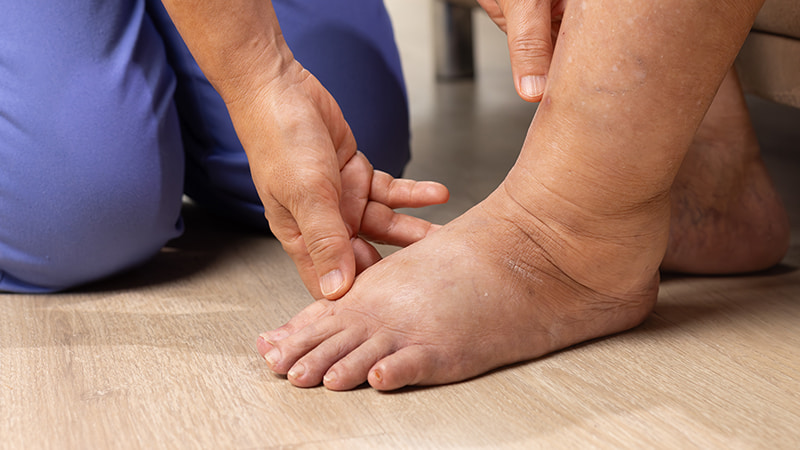
Swelling in the legs is something I see in my office almost every day, yet it’s often misunderstood. Many people assume it’s just part of a long day, getting older, or standing too much. In reality, persistent or recurring swelling can be an early warning sign of vein problems that deserve attention. Continue reading below or watch the video to learn what your legs may be trying to tell you.
Leg swelling, or edema, happens when fluid collects in the tissues of the lower legs or ankles. While there are multiple causes — including heart, kidney, or liver issues — one of the most common culprits I see is vein dysfunction, particularly chronic venous insufficiency (CVI).
When the veins in your legs are working properly, blood flows back to the heart efficiently. If the valves in these veins weaken or fail, blood can pool in the legs, increasing pressure in the veins and causing fluid to leak into surrounding tissues. Over time, this leads to the visible swelling many patients notice.
Persistent swelling is not just a cosmetic concern, it’s a signal from your body. While it can be tempting to assume swelling is temporary or minor, there are patterns that suggest vein-related issues:
These signs often precede more serious vein problems, and identifying them early allows for treatment before complications arise.
I often hear patients say:
“It goes away overnight, so it’s not serious.”
Even if swelling improves with rest, recurring patterns can indicate early vein dysfunction.
“If it doesn’t hurt, it’s fine.”
Pain isn’t always present in the early stages. Swelling alone can be meaningful.
“It’s just part of aging.”
While vein issues are more common with age, persistent swelling should never be dismissed without evaluation.
Understanding the cause of leg swelling doesn’t require invasive tests. In my practice, I use a quick, painless ultrasound scan to evaluate blood flow and vein function. This in-office procedure gives us immediate insight into what may be causing the swelling and guides the most effective treatment options.
Left unaddressed, vein-related swelling can progress, sometimes leading to:
Recognizing swelling early and getting it evaluated allows patients to address the underlying issue before it worsens, protecting both your vascular health and quality of life.
We invite you to become a part of the Chuback Vein Center family. We are confident in our ability to restore your health and wellness.